Understand your equipment.
Specifications are useful only when they explain what changes in the real world. NSG Gear combines product education, buying guides, comparisons, reviews, and technical explainers so you can understand equipment before deciding what belongs in your kit, vehicle, home, or field setup.
Start with the problem. Then choose the equipment.
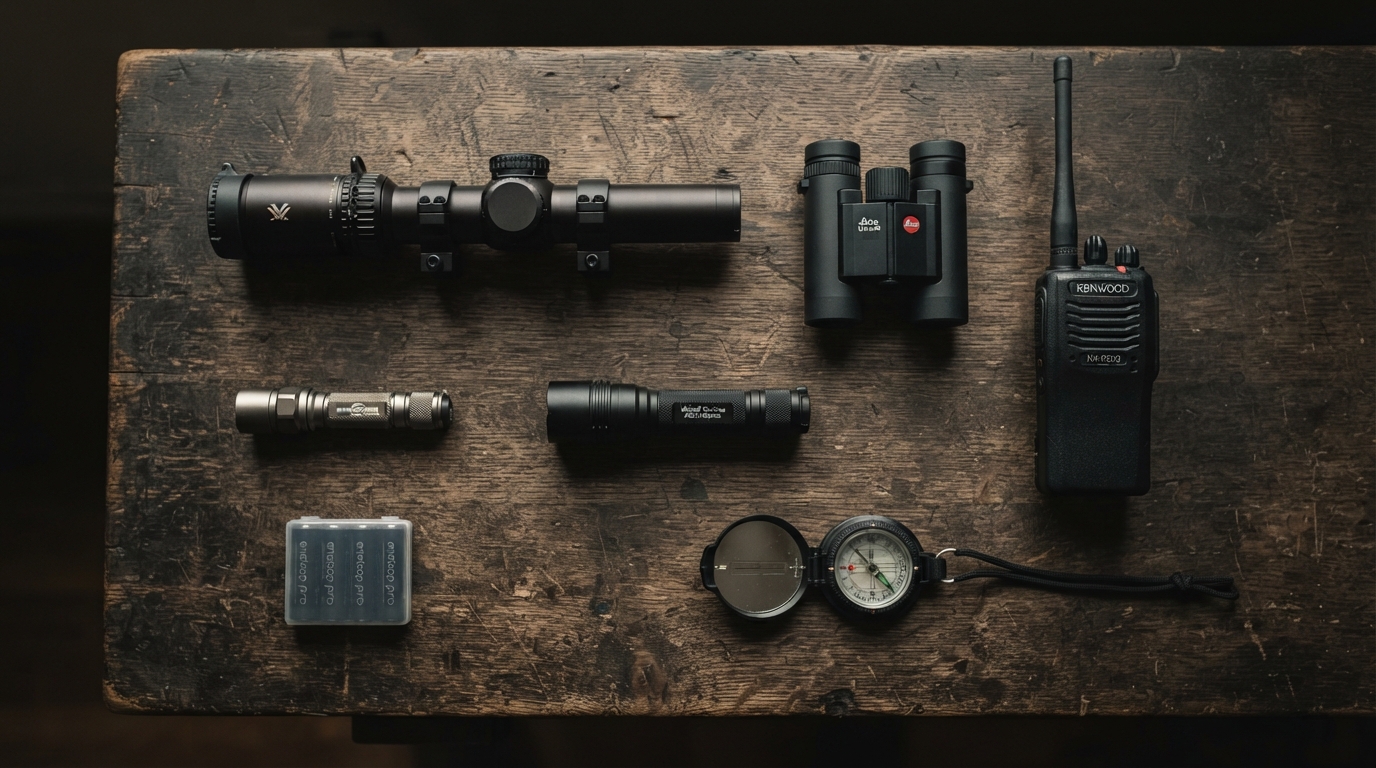
The best gear starts with a clear problem.
A product is useful only when it solves a problem better than the alternatives. More features, larger specifications, higher prices, and more accessories do not automatically make equipment more useful.
NSG starts with what the equipment is supposed to accomplish, then examines the technology, design, tradeoffs, and alternatives around it.
What problem is the product supposed to solve?
What does the design gain—and what does it give up?
Who benefits from those choices and who does not?
Better equipment decisions usually start before the product page.
Choose a category.
Optics
Understand magnification, lenses, field of view, eye relief, reticles, parallax, coatings, optical clarity, durability, and the design choices behind modern optics.
Explore Optics→Illumination
Learn what lumens, candela, runtime, beam pattern, power, controls, and output regulation actually tell you about a light.
Explore Illumination→Communications
Radios, weather alerts, satellite communication, battery planning, and the equipment behind practical everyday and emergency communication.
Explore Communications→Power
Understand batteries, portable power stations, charging, solar input, inverters, runtime, and the specifications behind portable electrical systems.
Explore Power→Navigation
Explore GPS devices, maps, compasses, satellite tools, location technology, and the equipment used to understand where you are and where you are going.
Explore Navigation→Packs & Storage
Understand capacity, organization, materials, fit, durability, weather resistance, modularity, and how storage equipment should match what you actually carry.
Explore Packs & Storage→Outdoor Equipment
Practical gear for camping, field use, household resilience, outdoor work, and everyday preparedness.
Explore Outdoor Gear→Water & Filtration
Understand filters, purifiers, containers, treatment technologies, flow rates, capacity, maintenance, and the practical equipment behind safer stored and collected water.
Explore Water & Filtration→Learn how to evaluate gear before comparing brands.
- 01
Define the problem
Be specific about what the equipment needs to accomplish.
- 02
Learn the important specifications
Separate useful measurements from marketing noise.
- 03
Understand the tradeoffs
Most design improvements come with cost, weight, size, runtime, complexity, or performance compromises elsewhere.
- 04
Compare realistic alternatives
Products should compete against equipment that actually solves the same problem.
- 05
Read the review last
Once you understand the category, a product review becomes far more useful.
Category knowledge makes reviews more valuable.
Glass, geometry, and tradeoffs.
Optics are frequently described through magnification, objective size, reticles, lens coatings, field of view, eye relief, adjustment systems, and durability claims. Those specifications interact rather than existing independently.
A flashlight is more than its lumen number.
Output, intensity, beam shape, sustained runtime, battery format, heat management, controls, and durability all influence whether a light is actually useful.
A radio is useful only if someone can hear it.
Range claims are only part of communication performance. Frequency, terrain, antenna design, legal service rules, battery life, network availability, and the people using the system all matter.
Watt-hours, watts, and what actually runs.
Portable electrical equipment is often described through battery capacity and inverter output. The useful question is what those numbers mean for the loads you actually want to operate.
Electronics help. Fundamentals still matter.
Modern navigation tools can provide location, mapping, route information, satellite communication, and weather data, but power, signal availability, map quality, and user understanding remain part of the system.
Capacity is not the same as usefulness.
A larger pack can carry more equipment, but organization, fit, access, weight distribution, materials, weather resistance, and the amount you realistically need to carry may matter more than total volume.
Filter, purify, store, rotate.
Water equipment solves different problems. Storage containers hold water. Filters remove selected contaminants. Purification methods address different risks. No single product automatically replaces an entire water plan.
Every specification should answer a question.
CAPACITY
How much can it hold or store?
OUTPUT
How much work, light, energy, or signal can it produce?
RUNTIME
How long can useful performance be maintained?
WEIGHT
What does capability cost in portability?
SIZE
Where can the product realistically be carried or stored?
DURABILITY
What conditions is the product designed to tolerate?
COMPATIBILITY
What other equipment, standards, batteries, or systems does it depend on?
SERVICEABILITY
What happens when something breaks or wears out?
A big number is useful only if you know what it changes.
Learn the category before the product.
Flashlight Specs Explained: Lumens, Candela and Runtime
7 min read
How to Choose a Handheld Radio
9 min read
Water Filters vs. Purifiers
6 min read
How to Read Gear Specifications
7 min read
How to Evaluate an Optic Before Buying It
10 min read
What Makes a Good Emergency Backpack?
8 min read
Understanding Battery Capacity
6 min read
Decide what matters before choosing a model.
- →
Optics Buying Guide
Choose the optic around the viewing problem before comparing brands.
- →
Handheld Flashlight Buying Guide
Match output, beam type, and runtime to the task at hand.
- →
Portable Power Station Buying Guide
Understand watt-hours, inverter output, and what actually runs.
- →
Emergency Radio Buying Guide
Frequency, service rules, and practical everyday communication.
- →
Water Filter Buying Guide
Filters, purifiers, and the equipment behind safer water.
- →
Everyday Preparedness Pack Guide
Capacity, organization, fit, and what you realistically carry.
Some decisions make more sense side by side.
- →
Water Filter vs. Purifier
Two technologies that address different water risks.
- →
Portable Power Station vs. Generator
Two different tools for two different power problems.
- →
Rechargeable vs. Replaceable Batteries
Convenience, runtime, and cold-weather tradeoffs.
- →
Handheld Radio Types Explained
Frequency, licensing, and use-case differences.
- →
Different Optic Formats Explained
How optical formats solve different viewing problems.
- →
Throw vs. Flood Lighting
Concentrated reach versus wide nearby coverage.
Reviews built around a decision.
NSG reviews should explain performance, design, usability, tradeoffs, alternatives, testing limitations, and who should actually spend money on the product.
Product testing is being added as equipment becomes available.
In the meantime, NSG buying guides and technology explainers establish the criteria future reviews will use.
Represent a manufacturer or brand? NSG accepts appropriate products and loaner equipment for independent evaluation. Supplying equipment does not guarantee favorable coverage.
Test the product against the problem.
Not every product can be evaluated with the same test. The methodology should follow the function of the equipment and clearly explain what was—and was not—tested.
Documentation
Record known specifications, model details, configuration, and manufacturer-provided documentation.
Physical Inspection
Evaluate construction, materials, controls, interfaces, and overall condition.
Core Function
Test the primary function the product is designed to perform.
Controls & Usability
Document how the product operates, adjusts, and handles normal interaction.
Runtime / Power
Document battery behavior and sustained performance where relevant.
Environmental Conditions
Observe behavior under relevant weather, temperature, and field conditions.
Durability Observations
Note construction and wear behavior where responsibly testable.
Comparison
Compare equipment against realistic alternatives solving the same problem.
Long-Term Ownership
Add longer-term observations where extended use is available.
Disclosure
State whether equipment was purchased, supplied, loaned, or discounted.
Testing methodology should fit the product.
Equipment is only part of preparedness.
Preparedness begins with systems and plans. Gear supports them.
Better research before better purchases.
Get new gear explainers, buying guides, review notes, equipment testing, and useful comparisons through NSG Field Notes.