
More light is not always better light.
Flashlights and illuminators are often sold through the largest number printed on the package. Useful illumination depends on much more: total output, intensity, beam shape, distance, runtime, wavelength, power, controls, and the environment.
Learn what the specifications actually change before comparing products.
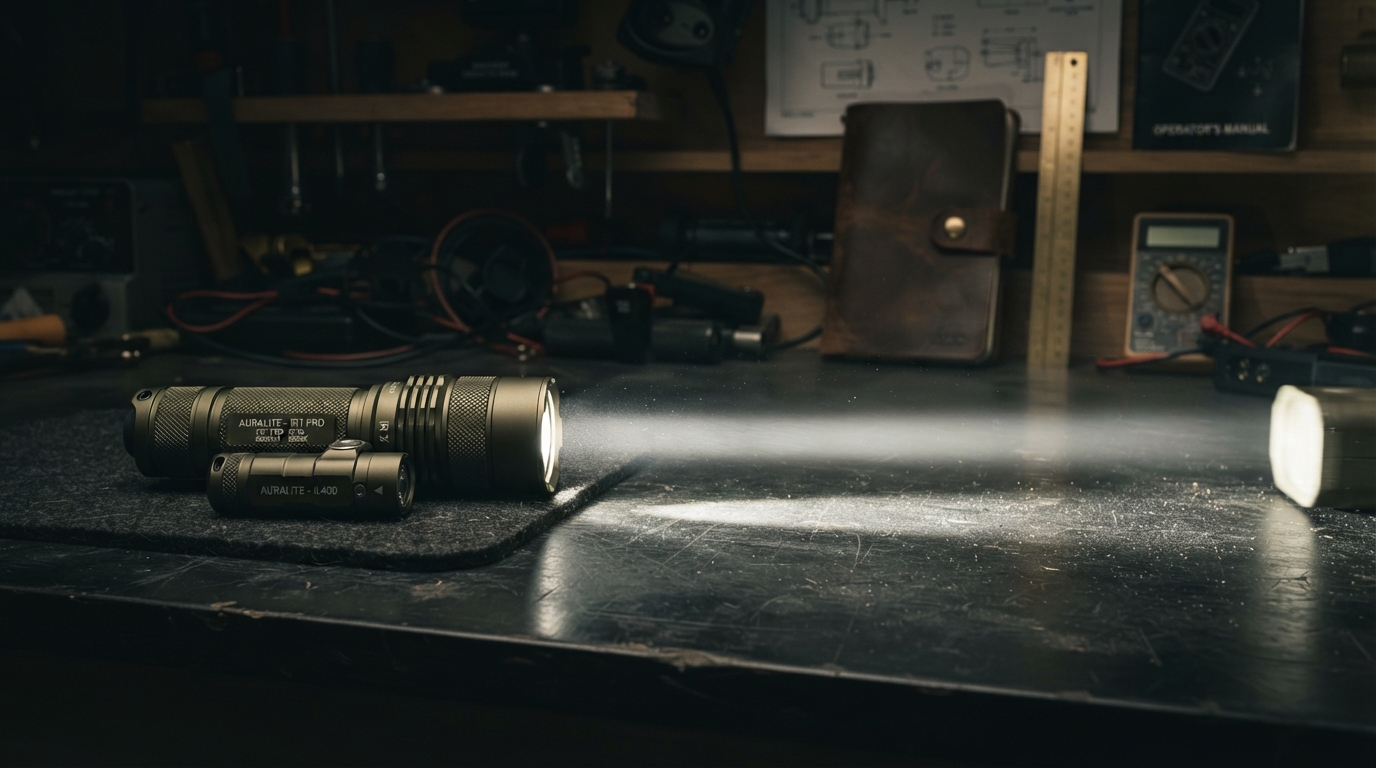
What makes a light useful?
Useful illumination is a combination of how much light is produced, where that light is concentrated, how the beam is shaped, how long the output can be sustained, and whether the light matches the task.
Lumens describe output. Candela describes intensity. Neither tells the whole story alone.
Visible light and infrared illumination are not interchangeable.
Produces light intended to be seen directly by the human eye. Used for household, outdoor, emergency, navigation, inspection, and general lighting.
Produces infrared energy intended for compatible imaging equipment rather than ordinary unaided viewing.
Infrared illumination is useful only when paired with equipment capable of detecting the relevant wavelength.
Learn illumination in the right order.
Illumination becomes easier to evaluate once the specifications are separated into the questions they actually answer. Start with the two most advertised numbers, then learn beam design and infrared.
- 01→
Lumens vs. Candela
Learn what the two most commonly advertised flashlight specifications actually describe.
- 02→
Understanding Beam Pattern
See how hotspot, spill, beam width, and optics change useful illumination.
- 03→
Throw vs. Flood
Understand why a wide area light and a concentrated beam solve different problems.
- 04→
Infrared Illumination Explained
Learn how IR illumination interacts with compatible low-light equipment.
- 05→
Buying a Practical Handheld Light
Turn the specifications into a realistic buying decision.
Lumens measure total light output.
Lumens describe the total quantity of visible light emitted by a source. The number is useful, but it does not tell you how concentrated that light is or how far the beam will remain useful.
A 2,000-lumen light is not automatically “better” than a 1,000-lumen light.
Beam design and intensity determine where that output actually goes. Two lights with identical lumen ratings can produce very different beams.
Candela tells you how concentrated the light is.
Candela describes luminous intensity in a particular direction. Two lights with similar lumen output can produce very different beams if one concentrates more of that light into a smaller area.
Lumens vs. candela: you usually need both numbers.
Answers: how much visible light is being produced overall?
Answers: how intense is the light in a particular direction?
Beam shape connects those two specifications to the real-world result.
The beam matters as much as the headline number.
The shape of a beam determines where the emitted light actually goes. A light with modest output and a well-designed beam can be more useful than a higher-output light with a poorly shaped beam.
Hotspot
The concentrated center of the beam that carries the most intensity.
Spill
The wider, softer light surrounding the hotspot that illuminates the surrounding area.
Beam Width
How broadly or narrowly the light is distributed across the scene.
Transition
How smoothly the beam moves from the hotspot into the spill.
Optics / Reflector
The physical design that shapes where the emitted light goes.
Wide coverage or concentrated reach?
Broad illumination across a wider area, generally prioritizing nearby scene coverage.
More concentrated intensity that can maintain useful illumination over greater distance.
The better beam depends on what you need to illuminate.
Infrared illumination adds light your eye cannot normally see.
Compatible night vision and imaging systems can detect infrared illumination outside ordinary human-visible wavelengths. This can provide additional scene information when natural illumination is insufficient.
Wavelength, output, beam shape, distance, receiving-device sensitivity, and environmental conditions all influence the result.
Wavelength changes the tradeoffs.
Different infrared wavelengths interact differently with emitters and sensors. Compatibility matters: an illuminator only helps when the receiving device is sensitive to the wavelength it produces.
Output specifications may not translate directly between products, so wavelength and compatibility should be checked together rather than compared as a single number.
Maximum output means little if it lasts two minutes.
Flashlight runtime depends on output level, battery capacity, battery chemistry, temperature, driver efficiency, heat management, and how the manufacturer defines its runtime test.
Battery Type
Chemistry and format affect capacity, weight, availability, and cold-weather behavior.
Capacity
How much energy a battery stores, which bounds the total runtime available.
Runtime
How long useful output is sustained at a given level under defined conditions.
Heat
High output generates heat, which can force the light to reduce output to protect itself.
Output Step-Down
The reduction in output that occurs as heat or battery limits become relevant.
Rechargeable vs Replaceable
Built-in charging is convenient; replaceable cells extend runtime in the field.
Cold Weather
Battery performance can drop significantly as temperature falls.
Turbo output and sustained output are different questions.
Many high-output lights cannot maintain their maximum advertised output indefinitely. Heat and power limitations may cause output to decrease after startup.
Ask how long the useful output lasts—not only how high it peaks.
A light that steps down gradually to a sustained level can be more useful in practice than one that peaks high and falls quickly.
Light interacts with the environment.
A beam does not travel through empty space. Fog, rain, dust, surfaces, and surroundings all change how useful a light actually is in the field.
FOG
Moisture in the air scatters light and can reduce effective beam distance.
RAIN
Precipitation can diffuse and reflect light back toward the source.
DUST
Particulates in the air create visible scatter and reduce useful reach.
REFLECTIVE SURFACES
Nearby surfaces can bounce light back and change how bright a scene appears.
VEGETATION
Dense foliage absorbs light and can limit how far a beam remains useful.
INDOOR WALLS
Enclosed spaces reflect and contain light differently than open outdoor scenes.
DARK ADAPTATION
Bright light can temporarily reduce night-adapted vision, affecting perceived usefulness.
Start with what you need to illuminate.
Before comparing brands or sorting by the largest lumen number, define the task, the beam type you need, and the tradeoffs you will accept.
- 01
Define the task
Household emergency use, outdoor navigation, inspection, camping, property observation, and vehicle emergency kits all prioritize different characteristics.
- 02
Choose beam type
Decide whether broad nearby coverage or concentrated distance is more useful.
- 03
Understand output
Compare lumens and candela together rather than sorting by the largest single number.
- 04
Check sustained runtime
Do not evaluate only maximum output. Ask how long the useful output actually lasts.
- 05
Choose power
Consider battery availability, charging, runtime, and storage.
- 06
Evaluate controls
Controls should make sense for the intended task and be usable in the dark.
- 07
Consider size & durability
A useful light must still be practical to carry, store, charge, and operate.
Test the beam, not just the box.
NSG illumination reviews should evaluate output claims alongside beam profile, useful intensity, runtime, controls, power, thermal behavior, ergonomics, durability, and realistic alternatives.
Illumination reviews are being added as equipment becomes available.
Until then, the Illumination library focuses on the specifications, beam concepts, and buying frameworks that future NSG reviews will use.
Represent a lighting or illumination manufacturer? NSG accepts appropriate equipment for independent evaluation. Supplying equipment does not guarantee favorable coverage.
Measure the output. Observe the beam. Explain the conditions.
When NSG physically evaluates illumination equipment, the goal is to combine documented specifications with repeatable observations, disclosed conditions, and transparent limitations. Testing should help readers understand what changed—not simply create a score.
Documented specs
Record advertised output, candela, beam distance, runtime, battery format, and manufacturer-provided documentation.
Physical inspection
Evaluate construction, controls, lens, reflector, battery compartment, and overall build quality.
Controls
Document mode switching, output levels, lockout, and usability in the dark.
Beam pattern
Observe hotspot, spill, beam width, and transition under controlled conditions.
Output behavior
Document how output changes from startup through sustained use.
Runtime
Measure how long useful output is sustained at each relevant level.
Thermal step-down
Observe when and how the light reduces output to manage heat.
Battery compatibility
Document behavior across supported battery types and conditions.
Environmental observations
Note weather, temperature, and surfaces that affect beam behavior.
Comparison
Compare equipment against realistic alternatives serving the same task.
Disclosure
State whether equipment was purchased, supplied, loaned, discounted, or otherwise provided for review.
A free product does not buy a positive review.
Illumination terms worth knowing.
- LUMENS
- Total quantity of visible light emitted by a source.
- CANDELA
- Luminous intensity in a particular direction, describing how concentrated a beam is.
- LUX
- Illuminance—the amount of light reaching a given surface area.
- BEAM DISTANCE
- How far a beam maintains useful illumination under defined conditions.
- HOTSPOT
- The concentrated center of the beam carrying the most intensity.
- SPILL
- The softer surrounding light around the hotspot.
- FLOOD
- A broad beam prioritizing wider nearby coverage.
- THROW
- A concentrated beam prioritizing intensity over distance.
- INFRARED
- Electromagnetic energy outside the visible spectrum used by compatible imaging equipment.
- WAVELENGTH
- The specific band of infrared energy an emitter produces, which affects compatibility.
- RUNTIME
- How long useful output is sustained at a given level.
- OUTPUT REGULATION
- How a light maintains or reduces output over time as battery and heat limits change.
- THERMAL STEP-DOWN
- The reduction in output a light uses to manage heat during sustained use.
- COLOR TEMPERATURE
- The perceived warmth or coolness of the visible light produced.
Illumination questions people actually ask.
- Are more lumens always better?
- No. Total output is only one part of useful illumination. Beam intensity, pattern, runtime, controls, size, and intended task also matter.
- What is candela?
- Candela describes luminous intensity in a particular direction and helps explain how concentrated a beam is.
- What is the difference between throw and flood?
- Throw emphasizes concentrated intensity over distance, while flood emphasizes wider nearby coverage.
- Why does flashlight brightness drop after startup?
- High-output lights may reduce output as heat and battery limitations become relevant.
- Can humans see infrared illumination?
- Most infrared illumination used with compatible imaging equipment falls outside normal visible perception, although specific emitters and wavelengths can behave differently.
- Does IR illumination work with every night vision device?
- Compatibility and sensitivity vary by device and wavelength, so the receiving equipment matters.
Related low-light topics.
Understand how image-intensified systems use available and supplemental light.
Explore→ThermalLearn how thermal imaging forms images from temperature differences.
Explore→Low-Light OpticsExplore the lenses and optical systems behind low-light equipment.
Explore→Power & BatteriesUnderstand runtime, battery formats, external power, and storage.
Explore→Gear / IlluminationBrowse illumination equipment within the broader Gear library.
Explore→Low LightReturn to the master Low Light library.
Explore→Better lighting decisions start with better information.
Get illumination tests, flashlight explainers, Low Light guides, comparisons, and equipment research through NSG Field Notes.